AI Music Is the most human music

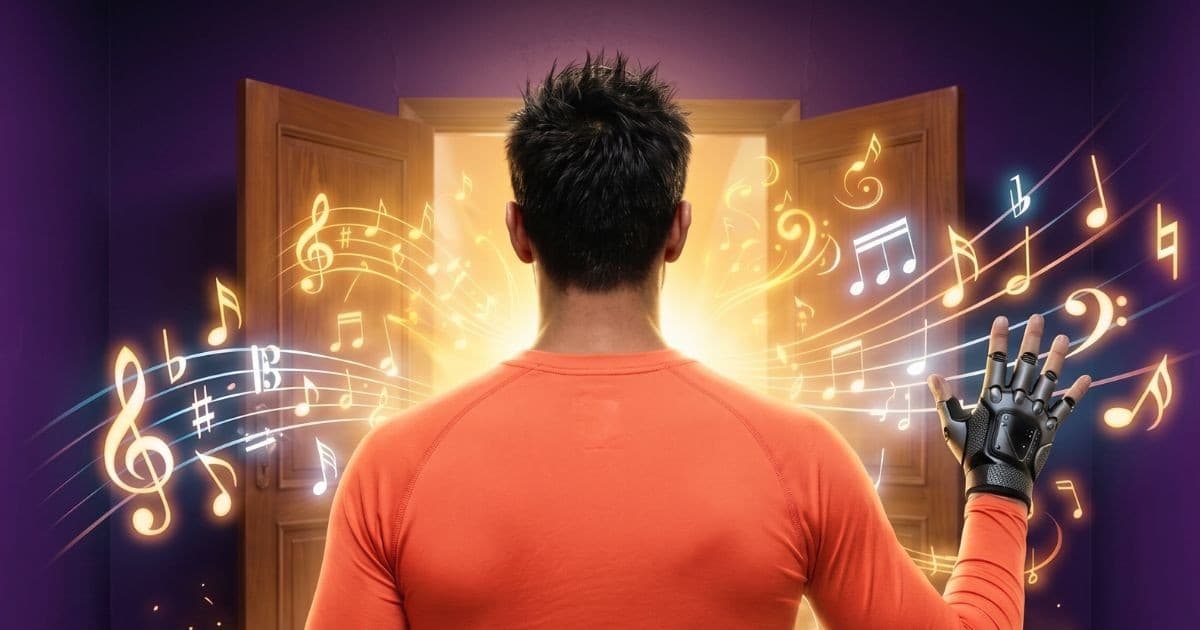
When I was young, my school friends would disappear every lunchtime to the Music Room, a room only they could access, because they could play a musical instrument. I was never allowed in. I was never invited in. I couldn't play an instrument. I can still see the door in my mind. I always wondered what it would be like to be in there.
Fast forward to now, and everyone seems to agree there are two kinds of music: AI music and human music. The split is treated as obvious, self-evident, barely worth questioning. AI music over here. Real music over there.
Is it though?
When you say "human music" has more value than AI music, stop and think about who you're actually including in that category. Not humanity. A fraction of it. The people who could afford instruments and lessons. The people whose bodies let them play. The people who happened to live near a scene, or know the right producers, or get lucky enough to be heard. The people who made it through a system that was never designed to let most people through.
Everyone else? They've been listeners. That's all that was on offer. When you can’t make music, you just have to consume it.
We've lived with that arrangement for so long we've started to mistake it for nature. It isn't. It's economics. It's gatekeeping dressed up as quality control. And now that a technology has come along that tears those gates off the hinges, the gatekeepers are calling it an attack on humanity. The audacity.
Let me tell you who AI music is actually for.
It's for the disabled person who has never been able to hold an instrument that needs two working hands. The ones who could never get their voice into a microphone and have it sound like them. Their songs, finally out in the world.
It's for the kids who want to make music now. Not a recorder recital they are being forced through at school. A real song. With words they chose. Saying what they actually feel. The fact that they haven't put in ten thousand hours yet does not make their expression less real.
It's for the millions of people who have always had music in them: melodies, lyrics, entire songs, but no path to get them out. These aren't failed musicians. They're people who were handed a world where making music required money or access or luck. They've always been there. Nobody counted them, because nobody needed to.
It's for the musicians who’ve spent years crafting something real and original and never got within shouting distance of the resources needed to realise it properly. Not the famous ones. The ones you've never heard of. The ones who know exactly what their record should sound like and could never afford to find out if they were right.
So when the people lining up against AI music ask what "we" stand to lose, ask them to be specific.
Who is "we"?
Is it the disabled person making their first song? The kids expressing themselves? The communities writing their own music again? The millions who can finally do something with what's been in their heads? The independent artists who can now hear their vision properly?
Or is "we" a much smaller group: the people who built their position, their identity, their income on the fact that making music was difficult and exclusive, and that they had figured it out? People who, faced with the democratisation of something they'd always owned, decided their best response was to tell everyone else their music doesn't count?
Because that's what the dismissal of AI music actually is. It's not a defence of art. It's a defence of a particular arrangement of power. It's people who benefited from scarcity, protecting scarcity. And the collateral damage, the people they're talking past, talking over, and talking down, is most of humanity.
AI music is not the end of human music. It’s the beginning of most humans being able to make music. All these songs, made by humans, to express their humanity, are entirely human.
This is the most human music has ever been.
The only people who can't see that are the ones who don't want to let the rest of us into the music room.
Mark Devlin is the CEO of UPCHART.
If you would like to join our community of creators, supporting each other as we grow as artists, sign up now. All new creators get 1250 free credits (and you can get more by rating other creators' songs)