Stop Apologising for AI Music

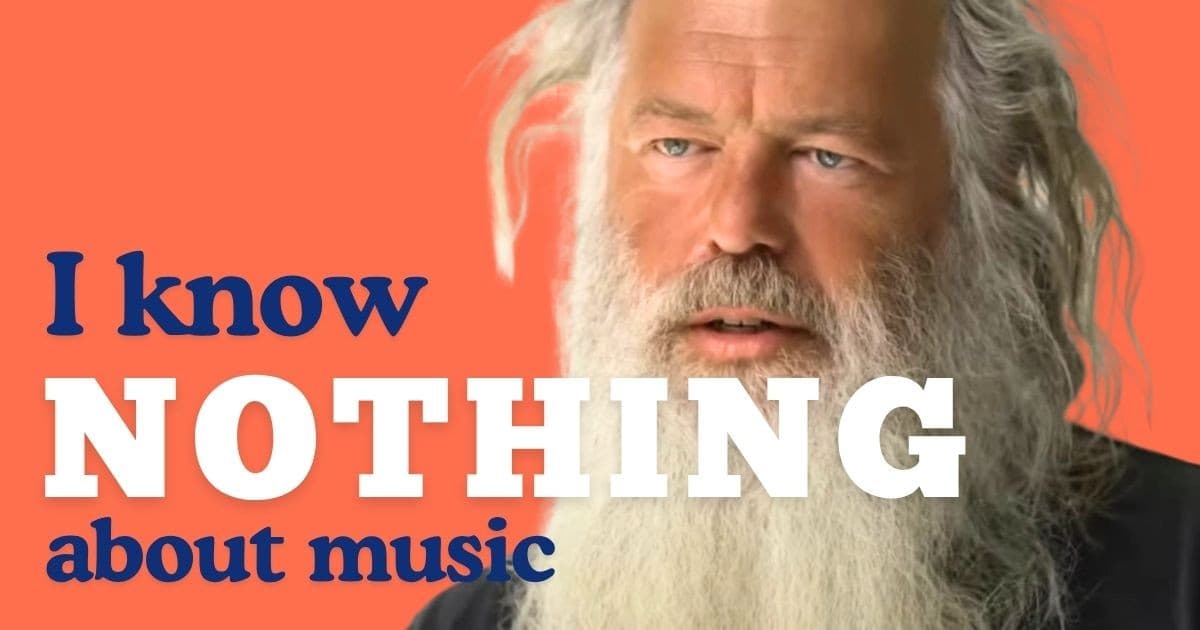
There’s a clip of Rick Rubin that gets shared a lot. He’s sitting there, completely calm, explaining that he has no musical ability. He doesn’t play instruments, doesn’t operate the machinery, and doesn’t even consider himself technical.
And yet, he helped shape the sound of entire generations. From Run-D.M.C. and the Beastie Boys to Red Hot Chili Peppers, Metallica and Johnny Cash, to Jay-Z, Kanye West and Adele. Different genres, different eras, same role.
So what exactly is he doing?
He’s listening. He’s guiding. He’s shaping taste. He’s making decisions. That’s the job. As he unapologetically says, "I know what I like, and what I don't like."
And it’s worth remembering, because suddenly people using AI tools feel like they need to apologise. “I didn’t play every note.” “I didn’t program the synth.” “I didn’t record it in a studio.”
But that misses the point. Rick Rubin doesn’t either. And he doesn't apologise for it.
The Industry Already Knows Where This Is Going
While people argue on social media about whether AI music is “real,” the record industry is already looking ahead and seeing the opportunity.
The model is simple: licensing. Not fighting it, but opening up catalogues in controlled, legal ways so people can create new work using existing sounds, styles and even voices. Remixes, reinterpretations, alternate versions. That’s not a threat. It’s a goldmine.
Take Queen. Their early albums famously declared “No synthesizers!” as a badge of honour. And then came Radio Ga Ga—synths everywhere. The tools changed, and they adapted. They didn’t lose their identity; they expanded it. AI is just the next version of that shift.
A thousand remixes of Bohemian Rhapsody? Most will be average. Some will be terrible. Some will blow your mind. That’s always been true. So there’s no need to apologise to record labels or legacy artists. They’ll be fine.
At Last, You Can Hear What You Hear
What matters far more is what this means for our community of new creators. For the first time, you can get the music out of your head as it actually sounds in your head. Until now, there have always been barriers—skills you didn’t have, people you needed, time and money you couldn’t access. Now you can build a full arrangement, shape tone and performance, and iterate until it matches what you imagined.
You’re no longer limited by your hands. You’re limited by your taste. And that’s where the real artistry has always lived.
But Shouldn’t You Learn an Instrument?
Of course. It teaches discipline, instinct, feel. But it’s no longer the gatekeeper. It’s one path, not the only path. You don’t need to build a camera to take a photo, or mix pigments to paint, or code everything from scratch to build software. Tools evolve. The question isn’t “did you use a tool?” It’s “what did you create?”
What’s really happening is a shift in control. From institutions to individuals. From scarcity to abundance. From access to taste. That’s uncomfortable for people who built their identity in the old system. For creators, it’s freedom.
So Stop Apologising
You’re not cheating. You’re not “less than” a real musician. You’re doing what creators have always done, using the best tools available to express something. The only thing that matters is the same as it’s always been: Is it good? Does it connect? Does it make someone feel something? Everything else is noise.
If you’re making AI music and wondering if you should justify it, don’t. You’re early. You’re working in a space most people haven’t even properly heard yet, never mind understood. And like every shift in music, there will be resistance. Then it settles.
What remains is what has always mattered: Great songs. Keep going.
Mark Devlin is the CEO of UPCHART. Unapologetically pro AI Music!
If you're an AI music creator — or curious to discover the best AI music out there — we'd love your help as we build this. Join the UPChart beta test waitlist to get FREE CREDITS and be part of shaping how AI music gets discovered.